Customizable Composite Outdoor Privacy Screen for Unique Architectural Needs
Release time:2026-01-29 Click:45
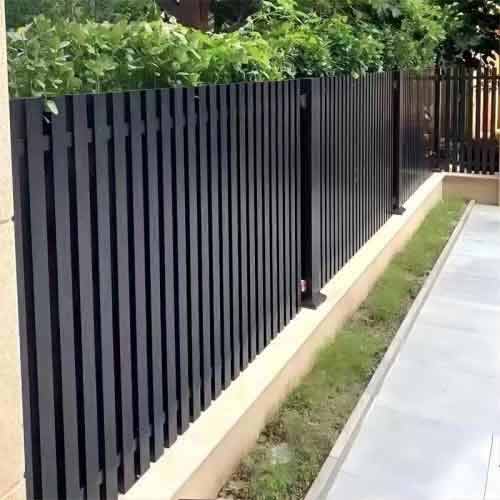
In modern architectural design, outdoor spaces are increasingly viewed as extensions of the living environment, requiring solutions that balance privacy, aesthetics, and durability. Customizable composite outdoor privacy screens offer a versatile answer to unique architectural needs, moving beyond the limitations of traditional fencing or hedge walls. Made from advanced composite materials like high-density polyethylene (HDPE) or wood-plastic composites (WPC), these screens can be tailored to match specific design themes while providing the necessary seclusion. They allow architects and homeowners to create distinct zones without compromising on style or performance.
The customization potential of composite screens is a significant advantage. Unlike masonry or timber, which are constrained by their natural forms, composite materials can be molded and fabricated into a vast array of shapes, patterns, and perforations. Designers can choose from solid panels for complete privacy, slatted designs for air and light, or laser-cut patterns that cast artistic shadows. Additionally, these screens can be finished in a spectrum of colors and textures, ranging from modern matte black and grey to wood-grain finishes that mimic the warmth of timber, ensuring they complement the architectural language of any building.
Durability and low maintenance are key features that make composites suitable for outdoor applications. Traditional wood privacy screens are prone to rotting, warping, and fading due to sun and rain exposure, requiring regular staining or painting. Composite screens, however, are engineered to resist these elements. They are impervious to moisture, insects, and UV radiation, ensuring that the color and structural integrity remain stable over time. This resilience allows the screens to withstand harsh weather conditions without the need for frequent upkeep, making them a practical choice for busy commercial properties or residential settings.
Another critical aspect is the modularity and ease of installation of these screens. Customizable composite systems are often designed as modular panels or slats that can be easily assembled on-site to fit specific dimensions. This modularity not only speeds up the construction process but also allows for future reconfiguration if the architectural needs change. The lightweight nature of composites compared to stone or concrete also simplifies structural requirements and installation logistics, reducing the overall cost and complexity of integrating a privacy solution into an existing landscape.
Ultimately, customizable composite outdoor privacy screens represent the convergence of function and design flexibility. They solve the challenge of creating privacy in outdoor spaces without creating visual barriers or imposing maintenance burdens. By offering a material that can be shaped to fit any artistic vision while remaining durable against the elements, these screens empower designers to realize unique architectural concepts. For projects aiming to achieve a distinct character and functional separation, composite screens provide an innovative, attractive, and long-lasting solution.
Previous article:Mitigating Urban Sound Pollution Through Engineered Noise Barrier Solutions
Next article:The Innovation of Aluminium Curtain Wall
Hot products
Mobile: +86 15097722953
Email:metalproducts2021@163.com
Email:1755383270@qq.com
